The Squirrel Effect
Aug 27, 2026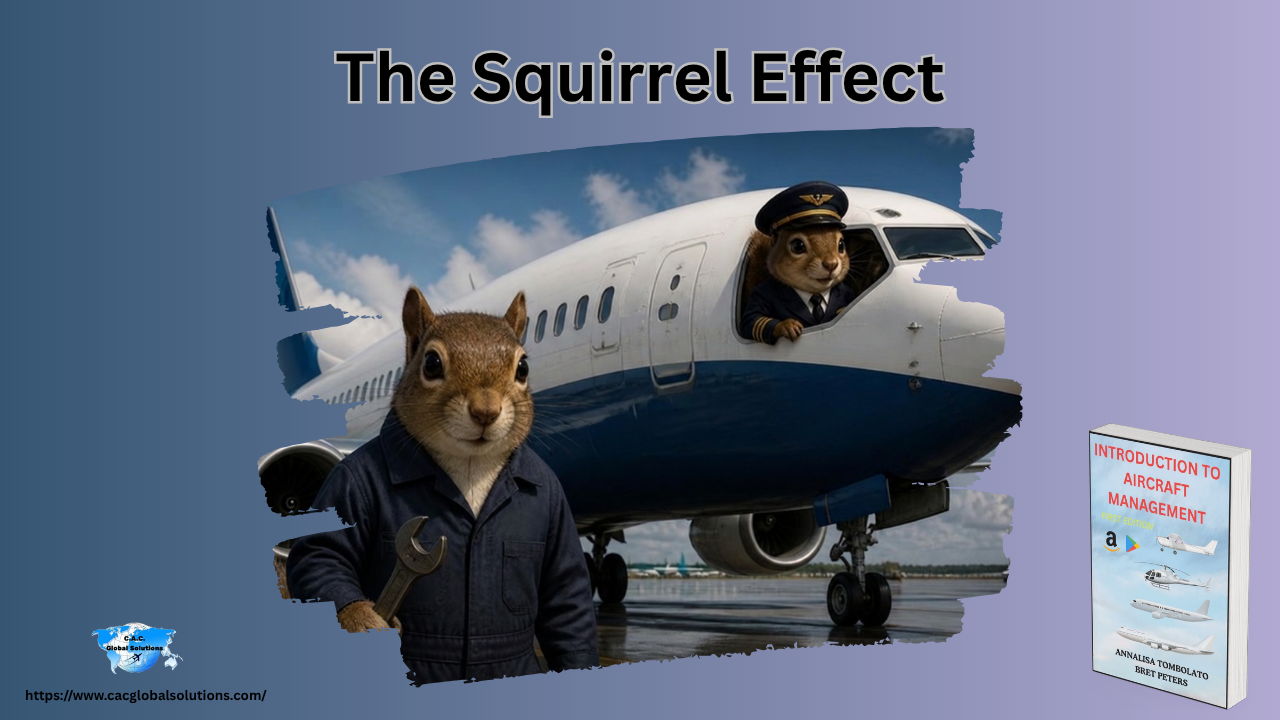
This month I’d like to share some thoughts on what we can call the “Squirrel Effect”.
I hope this will resonate.
We all know aviation is a high-performance and high-risk environment.
Compared to similar industries, aviation is light years ahead in terms of human factors studies, with processes in place for the distribution of important information such as airworthiness directives, regulations, policies and procedures. We have a procedure for anything. You name it, we have it. We’ve come to have a pretty solid structure.
Part of this “solidity” comes from and relies upon certain characteristics of the people working in aviation. We’re no Avengers; however, we’re certainly dedicated, resilient people who can take/manage a boatload of stress and still function.
We’re still part of society, and its dynamics impact everyone. I’m sure I’m not the only one who has noticed that we, the people, have become somewhat more scattered, easily distracted and too complacent over the last decade or so. Technology is not helping us stay focused, and there is so much going on around us that it’s impossible not to feel overwhelmed at times.
I’ve been talking to a friend lately, and he was… let’s use the word… “frustrated” with his manager because he’s been cancelling meetings five minutes before they’re scheduled, been completely absent and, when he is available, he’s all over the place.
Like a dog when he sees a squirrel, he jumps from one task to another with no consistency, method or reason… the Squirrel Effect!
This friend, who is supposed to review, amend and create policies and procedures for a company when necessary, was upset because his job relies immensely on this guy’s feedback.
He must report findings, corrective actions and put together procedures or propose amendments. To do that, he needs to talk to the person who ultimately must understand the changes, buy into them and implement them, making sure that all the other company employees follow them.
He was so upset. This way of working has been going on for years now, and I could see smoke coming out of his ears while he was explaining all of this to me.
Not only does he not appreciate the “last-minute meeting cancellation policy”, which happens all the time, but he’s also resentful because he loves his job and he can’t do it properly because of this guy.
The part that I found interesting about my friend’s situation is that other people have complained about this guy. Upper management is aware of his “squirrel” behaviour, as well as how much it is actually costing the company, and yet this guy still sits in a management position.
Another interesting behaviour that I’ve observed, and that seems to have increased over the years, is the lack of accountability and an unspoken tendency to lower the bar, which in aviation is concerning.
The phrase “do what you can” has become too popular, in my opinion.
Another situation worth noticing is when investigating with company staff why a procedure is not being followed. Managers spend an exhausting amount of time on a preamble about how the investigation—basically asking the simple question, “Why aren’t you doing this?”—is not, by any means, a way to point fingers or blame.
Didn’t we agree on this 50 years ago, when we said human factors are not there to blame, but to understand why things happen so we can correct our mistakes and improve the system?
You have to be able to have clear, transparent and sincere discussions about why things are not getting done without taking everything personally.
It’s the only way to identify the issue and solve it.
It might be that the procedure is not adequate. Some people may not know about it. A person may be having specific troubles and need real help and support.
Sometimes, it can also be that a person simply doesn’t align with a specific task or job description and needs to be removed.
Every role in aviation is high-performance and high-risk.
The attention always goes back to pilots, for obvious reasons, and then aircraft mechanics.
But it’s high-performance and high-responsibility work for maintenance planning engineers, CAMO engineers, technical officers and other personnel too, in all kinds of organizations, from repair stations to aircraft management companies and civil aviation authorities.
We don’t have the entire picture of what our colleagues do and how our actions may affect them.
Something as simple as not reporting a defect can have an avalanche effect, causing unsafe conditions, possible physical harm, delays, loss of money, etc.
For my friend, the inefficiencies that this situation is creating are surprisingly overwhelming.
And the truth?
This manager is not a good manager, and he shouldn’t be in a management position.
You can’t run a company in a scattered, unfocused way, particularly in aviation.
In our book Introduction to Aircraft Management, we dedicated the last chapter to topics like human behaviour, communication and communication styles, personnel management, multitasking, etc.
For me, these topics are as important as technical knowledge because our behaviour affects our environment, the final results that we achieve (or don’t achieve) and the people around us more than we think.
Aviation is not just about following procedures, and I don’t believe human factors is advanced enough to do justice to the complexity of human behaviour.
I believe the Squirrel Effect is just one example of why we should be putting more substantial effort into understanding human behaviour, interactions and relationships.
The human aspect plays a much bigger role in aviation than we realize.
If I have to hire someone permanently or just for a project, what I’m interested in is actually the human.
Technical stuff I can teach you. I’ll support you during a project, or we’ll figure it out together if none of us knows what to do.
Good human behaviour is difficult to find, and it takes a long time to develop.
I’m still learning.
What is good behaviour? I’ll leave that for another article.
Oh… and we didn’t even talk about the role of fatigue management…
Before I close, I’d like to share a thought.
Identifying problems is the easy part, but more than anything, nowadays we need solutions.
The internet and technology can be detrimental, but they can also be a source of free knowledge that we’ve never had before in human history.
YouTube is the biggest search engine on the planet, and you can find almost anything there. There are podcasts on every single topic you can imagine, with multiple ways to listen to them.
Explore these tools. Find your people. Bring the knowledge you find back to your organization and share it.
Just starting a conversation about a specific topic makes people instantly aware of it, and that’s the first step towards improvement.
Annalisa - Aircraft Management Specialist, Airworthiness, Co-Author of Introduction to Aircraft Management
