That's not my job!
Feb 11, 2026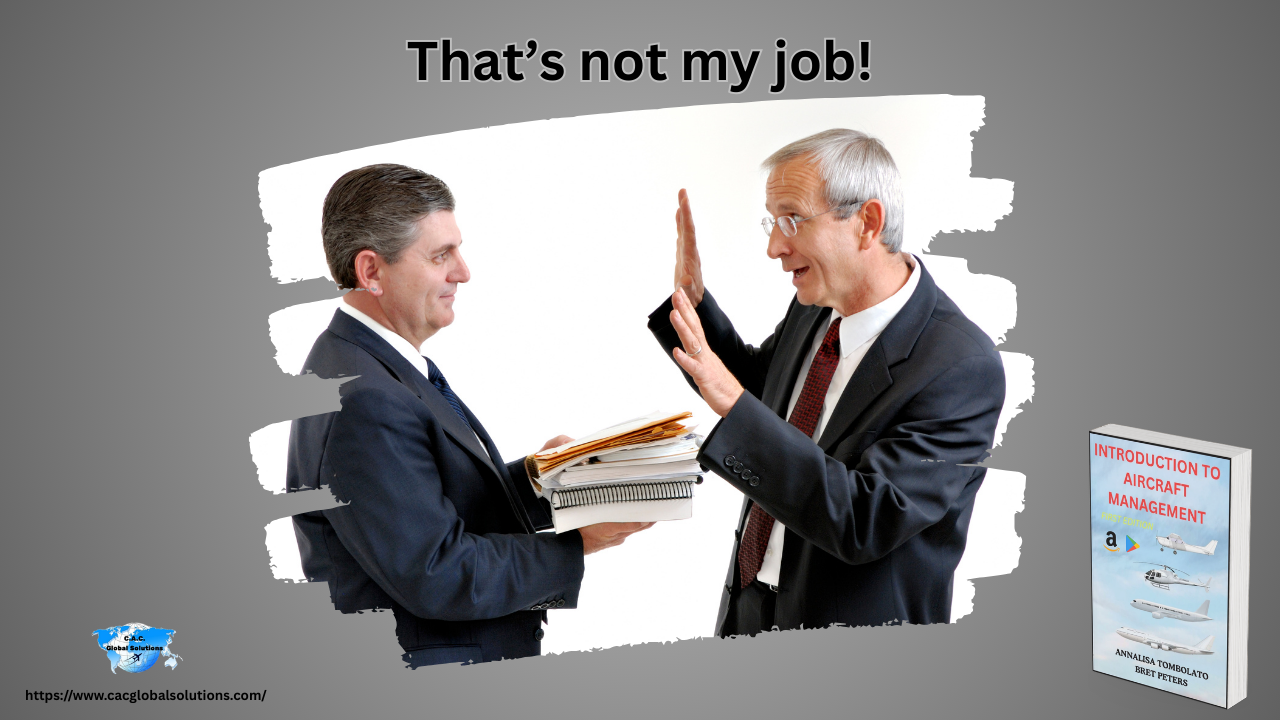
I came across this post during the holidays and thought I’d share it with you. The purpose of our articles has always been to invite reflection and offer our point of view, and perhaps this one will resonate with you. Some of you may already know this story. This was the post:
“That’s not my job!
This is a story about four people named Everybody, Somebody, Anybody, and Nobody. There was an important job to be done, and Everybody was sure that Somebody would do it. Anybody could have done it, but Nobody did it. Somebody got angry about that, because it was Everybody’s job. Everybody thought Anybody could do it, but Nobody realized that Everybody wouldn’t do it. It ended up that Everybody blamed Somebody when Nobody did what Anybody could have done.”
At first it made me laugh, but then the reality of the post sank in. Without clear responsibilities, important work can be left undone, and people end up frustrated.
We've spoken many times about the importance of identifying duties and responsibilities in aviation. Aviation is made of complex processes and it’s essential to be aware and understand the role you play in the big picture.
Failing to clearly identify duties and responsibilities creates disconnection. That disconnection leads to tasks not being completed, which ultimately impacts quality and safety.
We see this at every level of aviation, within aircraft management organizations, operators, and authorities. This lack of alignment is often easy to observe, feel, and experience. It can appear as two inspectors from the same authority providing completely different responses, or as poor handovers where critical tasks are missed and an aircraft is unable to meet its flight schedule.
Aviation is a big industry. We've all been organized and trained to work in silos; for good reason. There are such a broad range of aspects to manage that the need to identify and segregate specific fields and specialists such as aircraft certification, airworthiness, flight ops, maintenance, air traffic control etc. is glaringly apparent. However, if and when you don’t know what everybody else does, two things can happen:
- you take on more responsibilities than you should, (and more work that you should), or
- nobody does what needs to be done, and here is where the “That’s not my job” story comes in.
Environment also plays a significant role. In small organizations, there is often a tendency for one person to try to control and do everything, even when they’re not familiar with a particular process.
I recall a case where I was managing a Cayman-registered aircraft. During a Certificate of Airworthiness renewal, the “Technical Coordinator” (TC) interfaced directly with the inspector and provided responses without involving the airworthiness manager (me). Under OTAR requirements, the TC’s role is limited to ensuring that proper arrangements are in place for the management of continued airworthiness.
The result was more than 20 findings. All stemming from the fact that the TC simply didn’t have the right answers. I did, which made it relatively easy to close the findings, but it was a complete waste of time and energy.
I also find it interesting how, in small organizations, it can be surprisingly difficult to bring everyone onto the same page. There is often one person, sometimes two, who simply go their own way.
It’s a delicate balance. You want to do your best, but you don’t want to take on more than you can handle or assume responsibilities that belong to others. That wouldn’t be fair, and it isn’t effective either.
Ultimately, this is about more than just identifying duties and responsibilities. It’s also about understanding a company’s goals and mission, and aligning the right people with them.
We all come up with slogans and mission statements. Sometimes they’re just marketing tools; sometimes they genuinely reflect how an organization aims to operate. Yet I don’t recall many interviews where someone explained what the company truly believed in. The focus was almost always on technical competence, whether I knew how to assess an AD, an SB, or build a maintenance program; not on value congruency.
Of course those skills matter, but aviation is not just a technical business. Many of our podcast guests have said it well: aviation is a people-to-people business.
We don’t just move aircraft. We connect people, to family, to business opportunities, to places that inspire creativity and reflect the best of the human spirit. Aviation has nothing to do with apathy.
When people understand their role and believe in the purpose of what they are doing, “that’s not my job” disappears. Responsibility stops being a burden and becomes everybody’s commitment.
Annalisa - Aircraft Management Specialist, Co-Author of "Introduction to Aircraft Management"
